
XR Indoor wayfinding and discovery
BriteWay XR is a cloud‑based extended‑reality (XR) wayfinding and spatial‑intelligence service that helps public‑sector organisations make complex buildings easier to navigate for all users, including disabled and older people.
The service provides immersive 3D and augmented‑reality guidance, digital twins, and accessibility‑aware routes to support safer, more confident movement through hospitals, campuses, transport hubs, and civic buildings.
BriteWay XR combines indoor positioning, digital mapping, and XR visualisation to deliver step‑by‑step navigation, pre‑visit familiarisation, and real‑time route updates.
The platform integrates with existing building systems and can be deployed across mobile devices, kiosks, and web interfaces. It improves user experience, reduces staff wayfinding burden, and supports inclusive access to public services
Use it as a standalone app or integrated in your app to bring precise location accuracy together with high definition mixed reality (XR) guidance to help visitors plan and navigate your destinations with ease.
Send download link to:Brochure Indoor Mapping
Send download link to:Transport for Wales Case Study
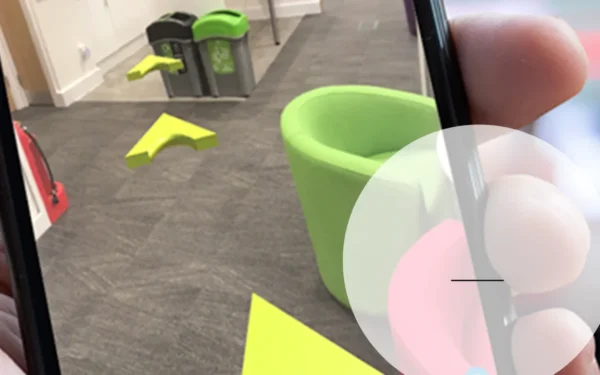
Visual indoor navigation with Augmented Reality

Smarter journey planning with Virtual Tours

Maintain Digital Twin assets
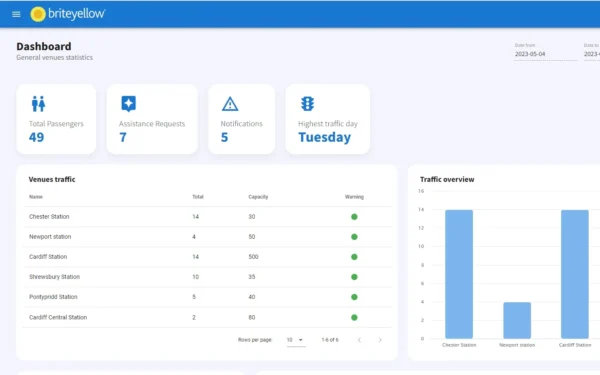
Increase footfall and sales with Insights
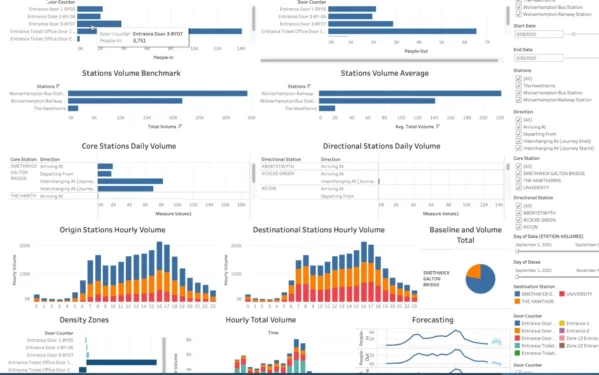
Improve operational efficiency with Forecasts
What is augmented reality indoor navigation?
Why use augmented reality indoor navigation?
Who is using augmented reality indoor navigation?
Where is augmented reality indoor navigation being used?
Related articles

Smart Buildings: Why Tenants Want Tech That Cares
Real-time occupancy data is no longer a nice-to-have—it’s the foundation for responsive environments. It ensures that workspaces are used effectively, communal areas remain welcoming, and facilities adapt in real time to shifting patterns of use.

Why Spatial Intelligence Is Becoming Essential for Public Venues
Public venues are under pressure to do more with less—deliver safer experiences, support accessibility, manage rising footfall, and operate with greater efficiency. Yet most buildings still rely on static tools that can’t keep up with modern expectations. Spatial intelligence is changing that. By combining indoor mapping, digital wayfinding, people counting, and real‑time behavioural insight, it transforms complex venues into responsive environments that understand their users and adapt to them. For hospitals, transport hubs, museums, and stadiums, this shift isn’t just a technological upgrade—it’s becoming essential to delivering the kind of experience people now expect.

Briteyellow: Smarter Journeys, Safer Spaces
Briteyellow is rolling out wayfinding and crowd monitoring solutions across England and Wales, enabling highly personalised journey planning in stations and underground networks while giving operators real‑time insights into passenger safety, flow, and convenience. The company now seeks technical partners with LiDAR and digital twin expertise to jointly pursue public tenders and commercial opportunities.